Electrotherapy in physiotherapy is, strictly speaking, the therapeutic use of electrical currents, almost always delivered through electrodes placed on the skin. It is used mainly to modulate pain, activate inhibited muscles and make the active work that follows easier. That definition covers TENS, interferential currents, electrical muscle stimulation (EMS), iontophoresis and electroacupuncture. In clinical practice, though, the term is also used as an umbrella for other electrophysical agents that do not deliver a transcutaneous current through electrodes in the same way, among them therapeutic ultrasound, diathermy and microwave therapy. This guide covers both groups, and separates them wherever the difference matters.
If you have been offered electrical stimulation for pain that will not quite settle, it is natural to have questions. None of these techniques replaces a proper assessment or an active plan for treating injuries and supporting rehabilitation. They sit alongside therapeutic exercise and, where it is indicated, manual therapy. Applied with good judgement, they can help to modulate pain, ease muscle activation or prepare the ground for active work, always on top of a sound assessment and an appropriate rehabilitation plan.
What is TENS and what is it used for?
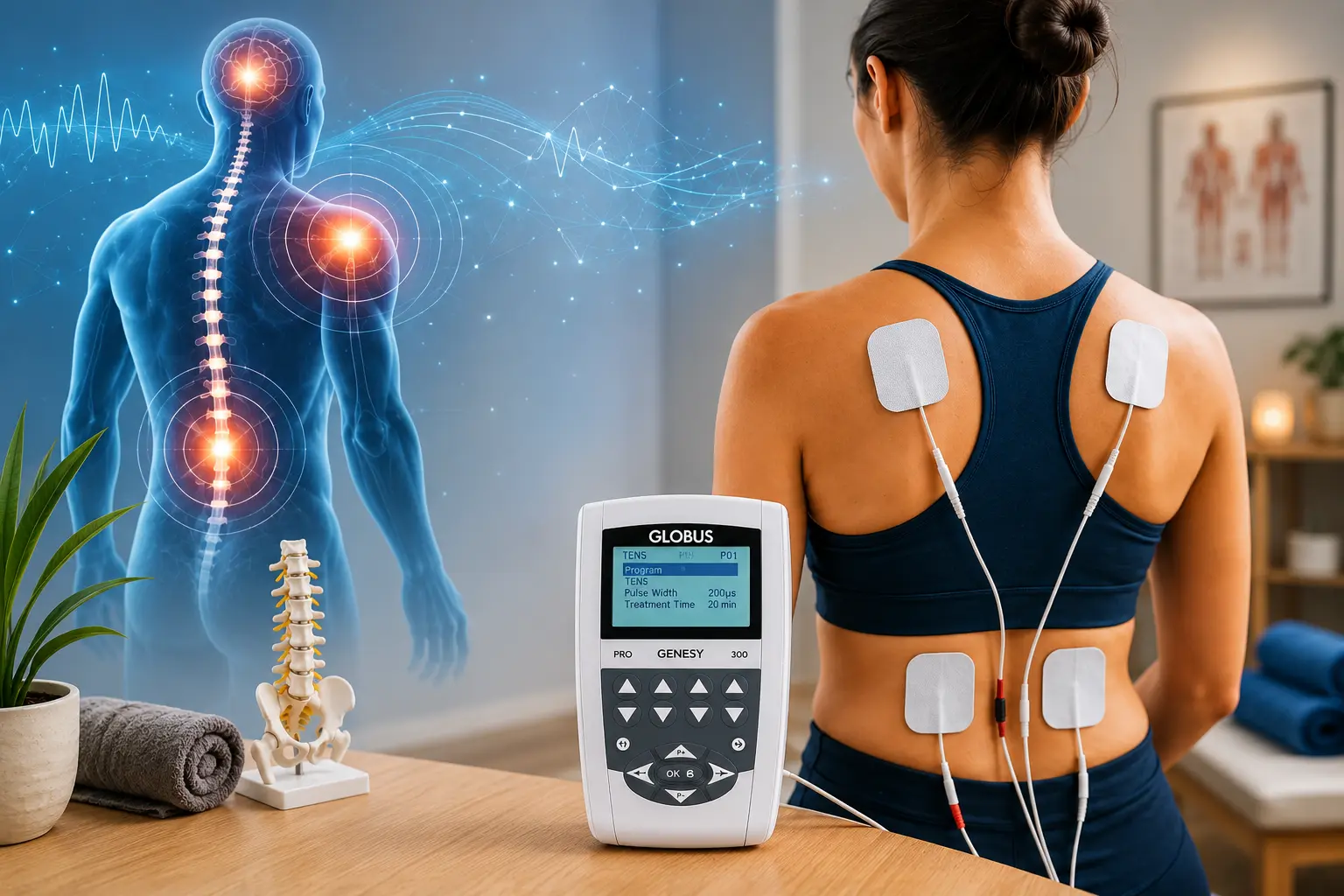
Transcutaneous electrical nerve stimulation (TENS) is a widely used form of electrotherapy, and it serves one very specific purpose. It modulates the pain signal, in both acute and chronic conditions. It produces a tingling or prickling sensation that should stay comfortable; if you notice stabbing, burning or pain, say so, so that the settings can be adjusted.
Several mechanisms have been proposed. TENS modulates pain transmission at the level of the spinal cord and activates the body's own inhibitory systems, including those involving endogenous opioids, the body's natural painkillers (Vance et al., 2014). The available evidence points to a reduction in pain during stimulation or immediately afterwards, although the magnitude varies from case to case (Johnson et al., 2022). In fibromyalgia, a systematic review found pain reduction in most of the trials it analysed, and better results from adding TENS to exercise than from exercise on its own (Megía García et al., 2019).
Parameters, TENS modes, electrode-placement principles, safe use and dosing are covered in our guide to TENS for pain relief.
What are interferential currents, and do they work?
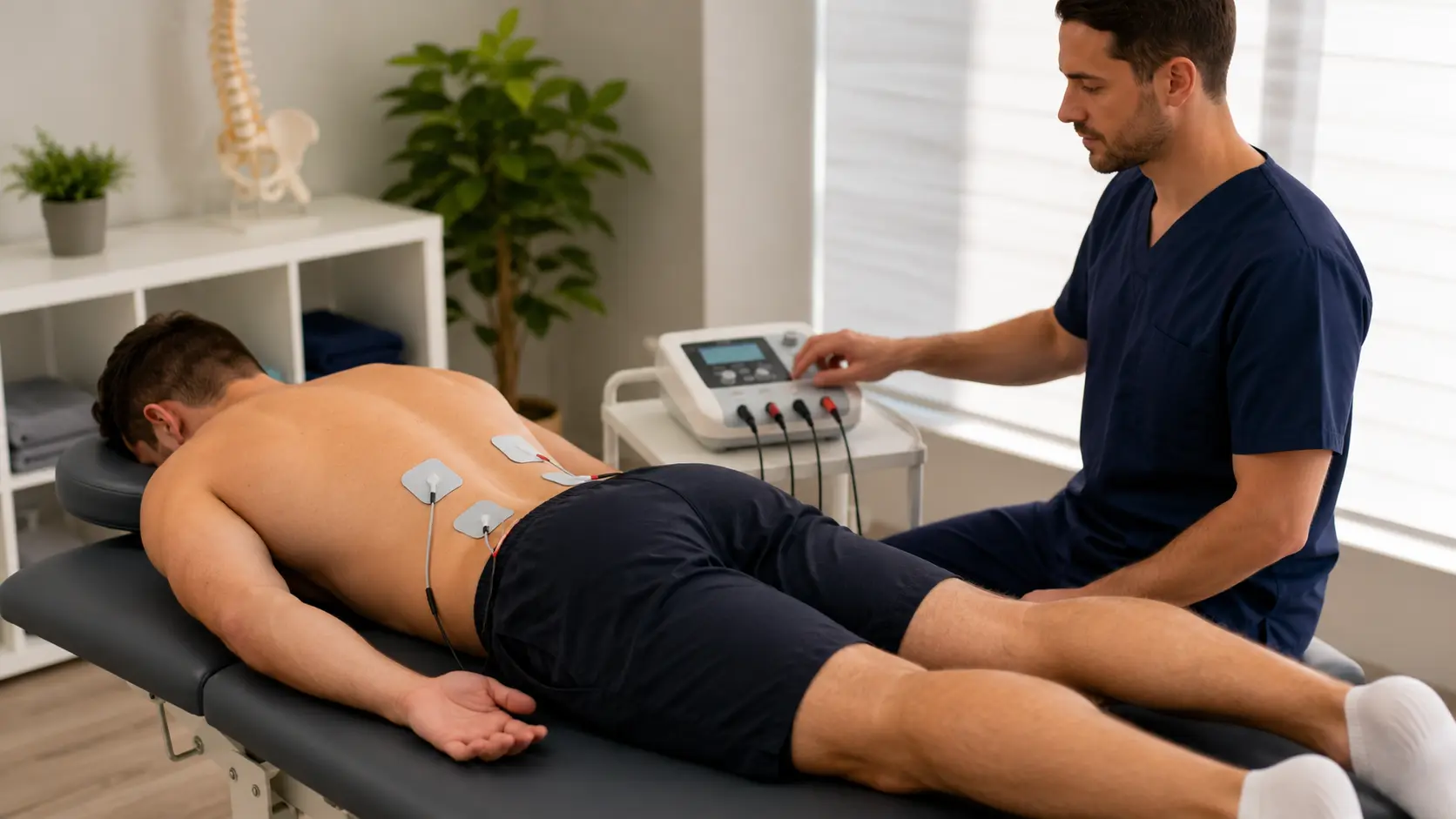
In the classic four-pole application, interferential currents cross two out-of-phase medium-frequency currents, medium frequency being the band above 1 kHz and below 10 kHz, which combine in the tissue to produce a low-frequency modulation. Some devices instead deliver a premodulated current through two electrodes. They are used mainly for pain relief in musculoskeletal pain, particularly in areas with more muscle mass.
Skin offers less impedance to medium frequency, which is put forward as a possible advantage in tolerability, but that on its own does not demonstrate that the technique reaches deeper tissue any better, or that it outperforms TENS (Rampazo and Liebano, 2022).
The sensation is different from TENS. You will notice a tingling or a broader, more "spread out" vibration across the area, less localised. The electrodes are usually positioned around the painful area, forming a crossover, and the intensity is increased gradually while you are asked how you feel it.
Their use in clinical practice is widespread, but the evidence supporting them is limited and does not all point in the same direction. A 2010 meta-analysis concluded that, added to another treatment, they outperformed control and maintained a difference from placebo at three months (Fuentes et al., 2010). A later meta-analysis did not find them more effective than the treatments they were compared with, either alone or added to others, and its own authors caution that the small number of available studies means the conclusion should be read carefully (Hussein et al., 2022). In non-specific mechanical neck pain, a Spanish review describes the evidence as simply scarce (Albornoz-Cabello et al., 2019). Given that picture, the reasonable aim is temporary symptom relief that lets you move or exercise more comfortably afterwards, never treatment with the current as the main intervention.
What is electrical muscle stimulation (EMS) used for?
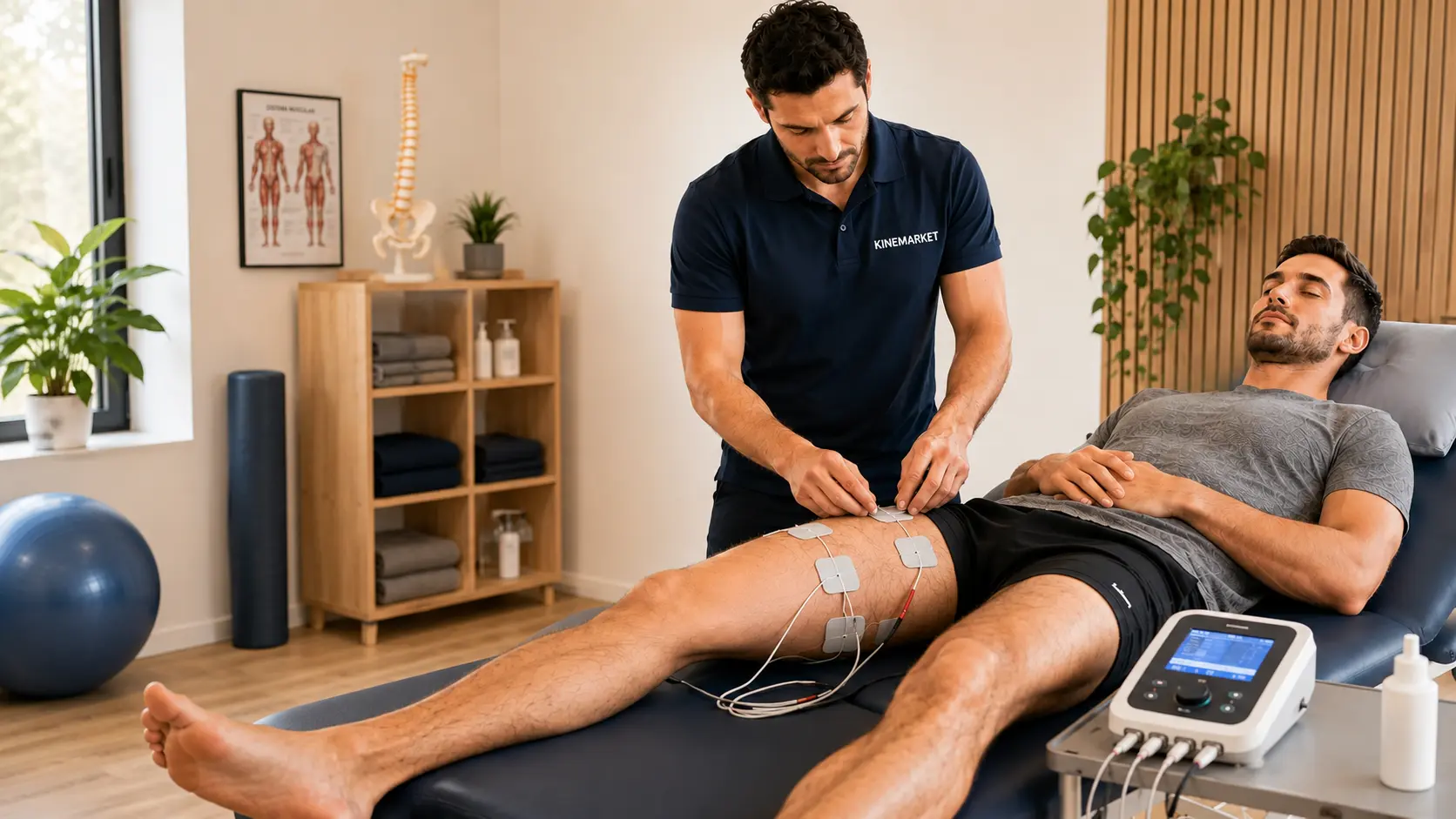
EMS produces controlled muscle contractions to re-educate a muscle that has stopped being recruited properly after an injury, surgery or a period of immobilisation, a phenomenon known as arthrogenic muscle inhibition. This can happen even when the nerve itself is intact. The electrical impulse activates the motor nerve, which, via the motor end plate, recruits the muscle fibres and generates the contraction.

It makes sense to use it where there is clear muscle inhibition: the quadriceps that will not respond after an arthroscopy or a knee replacement, the gluteal muscles that do not activate after weeks on crutches, or the shoulder muscles left "asleep" after prolonged immobilisation. In the quadriceps after total knee arthroplasty, adding electrical stimulation to rehabilitation is associated with improved strength recovery, although the authors themselves note that the clinical benefit remains to be confirmed (Peng et al., 2021).
What you will notice is rhythmic contractions of the muscle, as if it were contracting on its own, unlike the usual sensory settings for TENS and interferential currents, where no visible contraction is sought. The sensation should be tolerable. If a cramp or intense pain appears, stop and adjust the parameters.
Applications in rehabilitation and sport, electrode placement and the specific precautions are covered in our guide to electrical muscle stimulation.
What is iontophoresis?
Iontophoresis uses a continuous galvanic current to help certain electrically charged substances cross the skin. How much crosses, and how far it travels, depends on the medicine, the polarity, the dose, the condition of the skin and the protocol, so it guarantees neither selective delivery to the injured tissue nor the complete absence of systemic exposure.
The technique has been used to deliver particular medicines in localised conditions, including some tendinopathies, although its usefulness depends on the medicine, the indication and the specific protocol. The medicine must be clinically indicated, or prescribed where that applies, and administered in line with its authorisation, the clinical protocol and the professional scope of whoever administers it.
You will notice a concentrated sensation under the active electrode, and if your skin is sensitive you may notice mild itching or slight, tolerable irritation. A genuine burning sensation, marked redness or any sign of blistering means stopping the application immediately. Polarity, current density, application time and the properties of the medicine itself govern transport across the skin and skin tolerance, and there is no substitute for professional judgement here (Dhote et al., 2012).
Are ultrasound and diathermy electrotherapy?
Not strictly. Neither delivers a transcutaneous current through electrodes in the way TENS or EMS do. Therapeutic ultrasound uses mechanical waves, while diathermy and microwave therapy transfer electromagnetic energy that, depending on the system, can generate fields or induced currents in the tissue. In many clinics, though, "electrotherapy" works as an umbrella for the whole range of treatment-room equipment, which is why you will find them under that name.
Therapeutic ultrasound uses high-frequency mechanical waves that penetrate soft tissue and, depending on the technique, aims either for a thermal effect, meaning heating deeper structures, or for a non-thermal effect intended to influence tissue repair. That second part is best read as a proposed mechanism, not as demonstrated repair. Despite its widespread use, clinical effectiveness depends on the indication, the dose and the treatment it is compared against. A 2001 review of trials published between 1975 and 1999 found that, across most of the indications studied, active ultrasound did not outperform placebo (Robertson and Baker, 2001). A 2024 meta-analysis qualifies the picture by site: it found a favourable effect on pain in knee conditions, and mixed results, without significant differences, in shoulder conditions (Guan et al., 2024). There is therefore no single verdict across all soft tissues.
Diathermy and microwave therapy are two distinct thermal modalities, each with its own equipment, dosing and precautions. They are put forward as support in selected cases, but neither their indications nor their safety can be inferred from what applies to TENS or to ultrasound, and this guide does not cover them in the depth a dedicated one would.
All three are alike in what you feel, which is sometimes mild warmth and sometimes nothing at all. The absence of sensation does not amount to an absence of effect, but it does not confirm one either, so always ask what the aim of the treatment is. And if your session consists only of lying down while a machine does something and then leaving, ask why there is no active component.

What is electroacupuncture, and when is it considered?
Electroacupuncture combines fine needles inserted at specific points with low-intensity electrical stimulation, with a mainly analgesic aim. The sensation is a tingling or rhythmic pulsing around the needle, different from TENS or interferential currents.
It can be considered in selected cases, where there is a specific indication, the person accepts an invasive technique, and it is carried out by a suitably qualified practitioner with specific training. We do not present it as a fallback for resistant cases or as the alternative when other techniques fail, because its usefulness depends on the specific condition rather than on any general hierarchy of techniques.
Because it is a needle technique, it adds risks that transcutaneous currents do not carry: bleeding, bruising, infection, discomfort or injury at the puncture site, and vasovagal reactions. In prospective studies of needle acupuncture, rather than of electroacupuncture specifically, serious adverse events were uncommon, of the order of one in ten thousand patients, while mild and transient effects were considerably more frequent; safety depends directly on the training and competence of whoever performs it (Bäumler et al., 2021). Hygiene is therefore non-negotiable, with sterile single-use needles and clean skin, and the practitioner should review the contraindications and your individual sensitivity before starting.
Electrotherapy modalities compared
This table summarises the modalities covered in this guide, what each one does, what it is used for and how it feels. It is not an exhaustive classification of everything available.
| Technique | What it does | What it is used for | Usual sensation |
|---|---|---|---|
| TENS | Stimulates the sensory nerves and modulates the pain signal | Easing pain, both acute and chronic | Comfortable tingling or prickling |
| Interferential currents | Generate a low-frequency modulation from medium-frequency current, by crossing two currents or by delivering a premodulated one | Musculoskeletal analgesia, particularly over broad areas or areas with greater muscle mass | Broad vibration, more "spread out" than TENS |
| Electrical muscle stimulation (EMS) | Produces controlled muscle contractions | Activating and re-educating a muscle inhibited after injury, surgery or immobilisation | Visible rhythmic contraction of the muscle |
| Iontophoresis | Uses galvanic current to carry a medicine through the skin | Transdermal delivery of particular medicines, where clinically indicated | Concentrated sensation under the electrode; sometimes mild itching |
| Therapeutic ultrasound | High-frequency mechanical waves applied over soft tissue | Symptomatic support, with effectiveness varying by indication | Mild warmth or nothing perceptible |
| Diathermy and microwave | Apply electromagnetic energy using specific equipment and dosing | Thermal support in selected cases; not covered in depth in this guide | Perceptible warmth, sometimes nothing |
| Electroacupuncture | Combines fine needles with a gentle electrical current | Pain in selected cases, under supervision | Tingling or rhythmic pulsing around the needle |
When should electrotherapy not be used?
The list that follows applies to transcutaneous currents, meaning TENS, interferential currents and EMS. Diathermy and microwave therapy carry different thermal and electromagnetic risks, particularly near metal implants and electronic devices, and electroacupuncture adds those of an invasive technique. Do not transfer restrictions from one modality to another. Every device also comes with its own instructions for use, and those are essential reading.
Situations where it should not be applied without specific authorisation: application over an area with an active or suspected tumour, unless expressly indicated by the responsible medical team, and open wounds in the area of application. If you have a pacemaker, an implantable defibrillator or another electronic implant, do not use TENS, interferential currents or EMS on your own at home; at a clinic it should only be considered after consulting the team that manages the implant, and after weighing up the device, the electrode placement and the path of the current. On that last point, one clarification. Specialist clinical protocols for electrical stimulation of certain wounds do exist, but they have nothing to do with placing electrodes on an open injury at home, which you should never do.
Relative contraindications: pregnancy, particularly over the abdomen and lower back, and fever or acute infection. The decision depends on the area, the therapeutic goal and your general condition. Anticoagulant treatment is not in itself a general contraindication to TENS, interferential currents or EMS. It becomes relevant for needle techniques and for any procedure carrying a risk of bleeding or bruising, which need a specific assessment. Metalwork is not one either, and we cover it separately in the frequently asked questions (Houghton et al., 2010).
Areas calling for the greatest caution: the head in people with epilepsy; the front of the neck, because of the risk of a vagal reflex; and any placement that sends the current across the chest, especially where there is a cardiac history.
Symptoms that are never normal
During or after a session, say so immediately if you notice: intense pain that does not settle when the intensity is reduced, a burning sensation under the electrodes, a blister or visible skin damage, palpitations or dizziness. If any of these appear, stop the application, tell the practitioner, record the skin reaction and ask for the plan to be reviewed before continuing. Transcutaneous stimulation should not produce pain or burning. If it does, something needs adjusting.
What should you expect from an electrotherapy session?
A session starts with the goal for the day and a screening for contraindications, moves on to preparing the skin and placing the electrodes according to anatomical criteria, and finishes integrated into active work. This walkthrough reflects what a qualified physiotherapist does. It is not a guide to applying it yourself, but a way to understand the process and know what to ask.
The physiotherapist first defines what they are trying to achieve, whether that is easing chronic pain, activating an inhibited muscle or reducing the discomfort just enough for you to move that day, and reviews the contraindications with direct questions about pacemakers, pregnancy, epilepsy, changes in sensation and the condition of the skin. If anything has changed since the last visit, this is the moment to say so.
The intensity is increased gradually until the stimulus is clearly felt but not uncomfortable. For analgesia the aim is strong, comfortable sensory stimulation, with no requirement for a contraction; for muscle activation, a visible but tolerable contraction. There are no universal magic numbers, and parameters that work for someone else are not necessarily right for you, so copying settings from the internet or from another patient can be ineffective or counterproductive.
The session usually continues with movement, specific exercises or manual therapy where these are indicated. These techniques are part of a broader plan. They are rarely the plan.
Can I use an electrotherapy device at home?
Yes, with a specific goal and the precautions respected, but a home device does not match a clinic session. At the clinic the physiotherapist assesses your case, adjusts the parameters according to your response, places the electrodes precisely and combines electrotherapy with exercise or manual therapy. At home there is simpler equipment, fewer adjustments available and a greater risk of use without a purpose.
Safety checklist for home use:
- Set a specific goal before switching the device on, whether that is easing pain or activating a muscle.
- Always keep the intensity comfortable, never painful.
- Clean skin and well-adhered electrodes.
- Never over open wounds or irritated skin.
- Always avoid the front of the neck, because of the risk of a vagal reflex.
- Do not place the electrodes so that the current crosses the chest. If you have a heart condition or an electronic implant, seek advice before using the device.
There are situations where you should not improvise: a pacemaker or implantable defibrillator, pregnancy depending on the area and on medical judgement, epilepsy, active tumour, thrombosis or thrombophlebitis, and significant changes in sensation. In these cases, always seek advice before using any device.
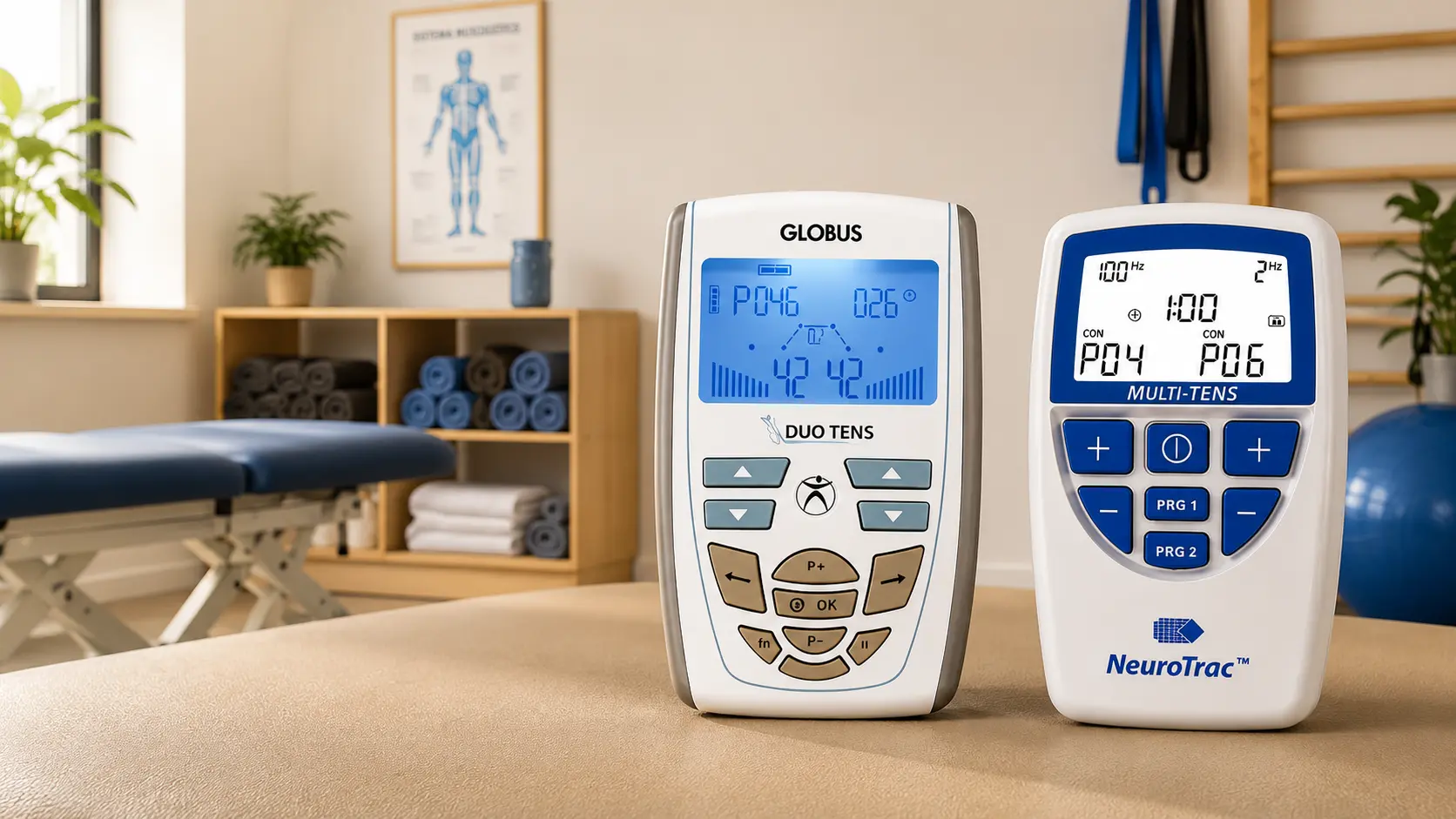
At Kinemarket you will find electrotherapy and electromedicine equipment for both professional and home use, so what follows is buying guidance rather than a clinical recommendation, which is a matter for your physiotherapist. What to check before buying, meaning channels, parameter control, conformity, consumables and service, is set out in our comparison of Globus and NeuroTrac, where those purchasing criteria are applied to two specific ranges.

Frequently asked questions about electrotherapy
Does electrotherapy hurt?
Electrotherapy should not hurt. With TENS or interferential currents you will feel a comfortable tingling, noticeable but never unpleasant; with EMS, rhythmic contractions that should be tolerable. If at any point the sensation moves from uncomfortable to painful, say so immediately so that the parameters can be readjusted.
How many sessions do I need before I notice an improvement?
The number of sessions depends on the goal. In people who respond to sensory stimulation, pain relief may be noticeable during the session or shortly afterwards; reactivating an inhibited muscle takes repeated treatment over longer. There is no fixed number, but if you notice no change after several sessions it is worth reviewing the approach with your physiotherapist, because these techniques are used within a broader rehabilitation plan rather than as the only intervention.
What are the risks of electrotherapy?
Adverse effects depend on the technique. With TENS or EMS applied properly, the most common are mild and transient, such as redness or irritation under the electrodes. Iontophoresis can cause irritation or chemical or electrical burns, thermal modalities can cause excessive heating, and needle techniques can cause bleeding, bruising, infection or a vasovagal reaction. Good screening and correct dosing reduce the risk but do not remove it.
Can I use TENS or EMS if I have plates, screws or metalwork?
Do not decide this on your own. The answer depends on where the metalwork is, on the type of current and on your current clinical situation. It can often be applied by adjusting the electrode placement and the therapeutic goal, but it needs a professional assessment first. If you have metal implants, always seek advice before using any device at home.
And if I take anticoagulants or have a history of thrombosis?
There is no universal yes or no. A healthcare professional should screen you first and choose the appropriate technique for your case. If there is acute thrombophlebitis or suspected active thrombosis, do not use any device on your own and seek advice first: this is a situation that needs medical assessment before any equipment. In the reference guide on electrophysical agents, active thrombosis is listed as a contraindication to transcutaneous currents over the affected area (Houghton et al., 2010). Always tell your physiotherapist about your medication and vascular history before any session.
Is it worth buying a TENS or EMS device for home?
It can be worth it if you have a specific goal, such as easing pain or activating a muscle, and you respect the precautions. It does not replace a clinical assessment, but it can be useful between sessions where there is a clear indication and a clear goal. Before deciding, have a physiotherapist assess your case and set the parameters for you.
Does electrotherapy work for all kinds of complaints?
Electrotherapy does not work for all kinds of complaints. Its usual applications are analgesia, muscle activation and, in some modalities, symptomatic support within a rehabilitation plan. It can be useful in some musculoskeletal presentations, such as low back pain or knee pain, or in recovery after surgery, where the right modality is chosen and integrated into a complete treatment plan. It is also worth knowing where the picture is unsettled. In Bell's palsy, a 2011 Cochrane review found no benefit from electrical stimulation over placebo for incomplete recovery, and no significant difference in synkinesis either, on limited evidence (Teixeira et al., 2011), and a later review was likewise unable to demonstrate its effectiveness (Burelo-Peregrino et al., 2020). A 2026 systematic review points the other way for one specific situation: added to usual care during the acute phase, electrical stimulation reduced the risk of incomplete recovery, at moderate certainty and with the authors' own caveats about risk of bias and short follow-up (Choi et al., 2026). That is a clinically delivered add-on in the first days, not something to try at home, and recommendations across guidelines are still not uniform. The prudent position is therefore unchanged. It should not be applied routinely, and certainly not at home, without specialist assessment and a specific protocol. Always ask your physiotherapist what the aim of the technique is and how they will measure whether it is working.
Sources and references
This article is a desk-based review of the scientific literature, accessed July 2026. It is not a clinical trial of our own and does not replace assessment by a physiotherapist. These are the sources we have drawn on.
- Johnson MI, Paley CA, Jones G, Mulvey MR, Wittkopf PG (2022). Efficacy and safety of transcutaneous electrical nerve stimulation (TENS) for acute and chronic pain in adults: a systematic review and meta-analysis of 381 studies (the meta-TENS study). BMJ Open, 12(2), e051073.
- Vance CGT, Dailey DL, Rakel BA, Sluka KA (2014). Using TENS for pain control: the state of the evidence. Pain Management, 4(3), 197-209.
- Megía García Á, Serrano-Muñoz D, Bravo-Esteban E, Ando Lafuente S, Avendaño-Coy J, Gómez-Soriano J (2019). Efectos analgésicos de la estimulación eléctrica nerviosa transcutánea en pacientes con fibromialgia: una revisión sistemática. Atención Primaria, 51(7), 406-415.
- Fuentes JP, Armijo-Olivo S, Magee DJ, Gross DP (2010). Effectiveness of interferential current therapy in the management of musculoskeletal pain: a systematic review and meta-analysis. Physical Therapy, 90(9), 1219-1238.
- Hussein HM, Alshammari RS, Al-Barak SS, Alshammari ND, Alajlan SN, Althomali OW (2022). A Systematic Review and Meta-analysis Investigating the Pain-Relieving Effect of Interferential Current on Musculoskeletal Pain. American Journal of Physical Medicine & Rehabilitation, 101(7), 624-633.
- Rampazo EP, Liebano RE (2022). Analgesic Effects of Interferential Current Therapy: A Narrative Review. Medicina (Kaunas), 58(1), 141.
- Albornoz-Cabello M, de la Cruz-Torres B, Barrios-Quinta CJ (2019). Electroterapia en el abordaje de la cervicalgia mecánica inespecífica. Revisión sistemática de la evidencia científica disponible. Fisioterapia, 41(3), 157-171.
- Peng L, Wang K, Zeng Y, Wu Y, Si H, Shen B (2021). Effect of Neuromuscular Electrical Stimulation After Total Knee Arthroplasty: A Systematic Review and Meta-Analysis of Randomized Controlled Trials. Frontiers in Medicine, 8, 779019.
- Dhote V, Bhatnagar P, Mishra PK, Mahajan SC, Mishra DK (2012). Iontophoresis: A Potential Emergence of a Transdermal Drug Delivery System. Scientia Pharmaceutica, 80(1), 1-28.
- Robertson VJ, Baker KG (2001). A review of therapeutic ultrasound: effectiveness studies. Physical Therapy, 81(7), 1339-1350.
- Guan H, Wu Y, Wang X, Liu B, Yan T, Abedi-Firouzjah R (2024). Ultrasound therapy for pain reduction in musculoskeletal disorders: a systematic review and meta-analysis. Therapeutic Advances in Chronic Disease, 15.
- Bäumler P, Zhang W, Stübinger T, Irnich D (2021). Acupuncture-related adverse events: systematic review and meta-analyses of prospective clinical studies. BMJ Open, 11(9), e045961.
- Houghton PE, Nussbaum EL, Hoens AM (2010). Electrophysical Agents. Contraindications and Precautions: An Evidence-Based Approach to Clinical Decision Making in Physical Therapy. Physiotherapy Canada, 62(5), 1-80.
- Teixeira LJ, Valbuza JS, Prado GF (2011). Physical therapy for Bell's palsy (idiopathic facial paralysis). Cochrane Database of Systematic Reviews, Issue 12, CD006283.
- Choi Y, Kim PW, Ahn E, Lee S (2026). Electric Stimulation Therapy for Bell's Palsy in the Acute Stage: A Systematic Review and Meta-Analysis. Facial Plastic Surgery & Aesthetic Medicine, 28(3), 284-292.
- Burelo-Peregrino EG, Salas-Magaña M, Arias-Vázquez PI, Tovilla-Zarate CA, Bermudez-Ocaña DY, López-Narváez ML, Guzmán-Priego CG, González-Castro TB, Juárez-Rojop IE (2020). Efficacy of electrotherapy in Bell's palsy treatment: A systematic review. Journal of Back and Musculoskeletal Rehabilitation, 33(5), 865-874.