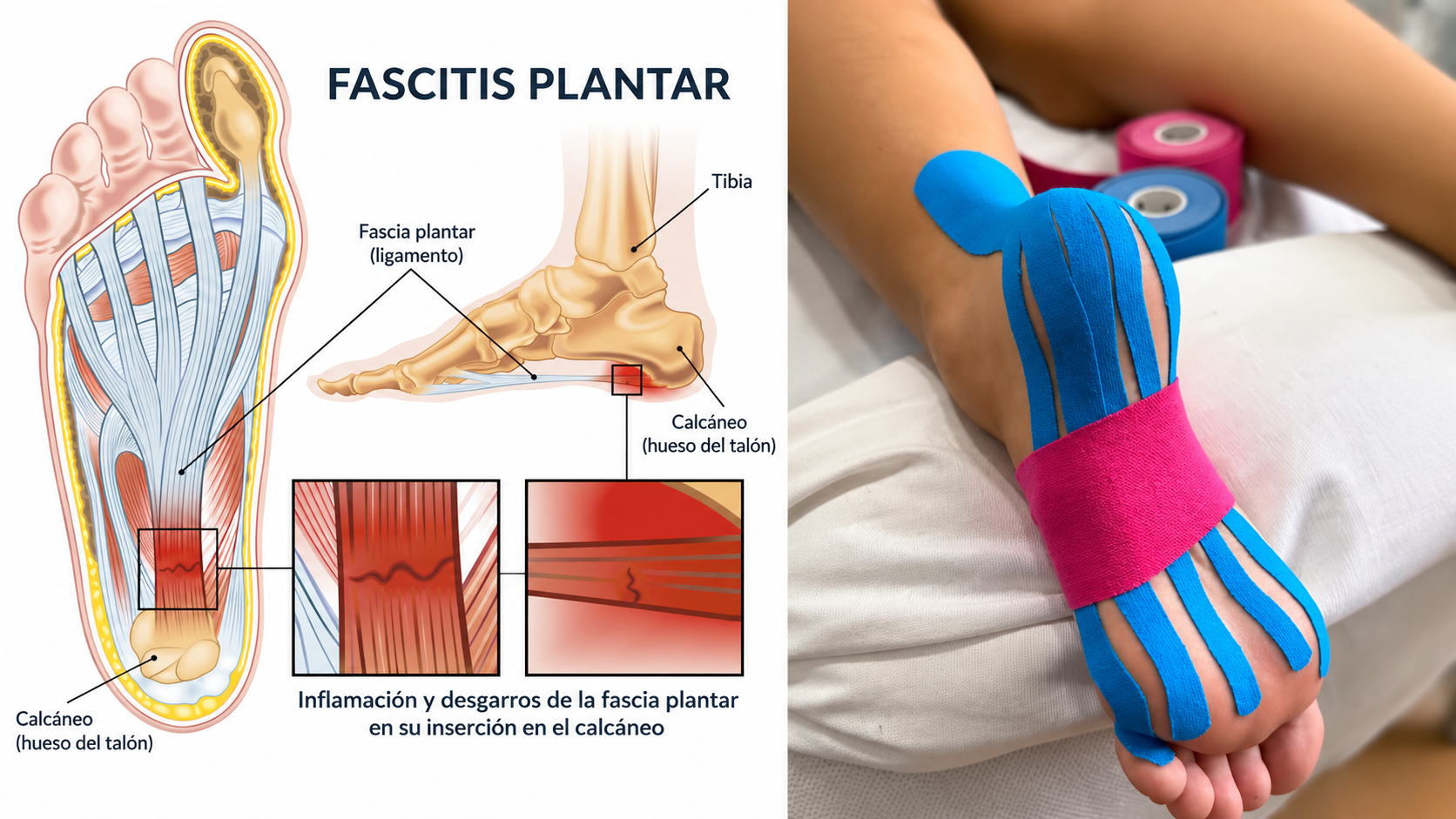
Taping for plantar fasciitis is a short-term complementary intervention that, depending on the technique, aims to offload the fascia or support the foot without locking movement. The best-established rigid technique is low-Dye taping, which in the trial by Radford et al. (2006) improved first-step pain by a mean of 12.3 mm on the VAS against sham ultrasound (95% CI −22.4 to −2.2). The 2023 APTA/JOSPT revision gives taping a grade A recommendation (Koc et al., 2023). This guide covers the two techniques you will use in clinic, when to choose each one, and the mistakes that undermine them.
At Kinemarket we distribute part of the material discussed in this article, including the Fasciitis Rehab support. This is a clinical guide based on the available literature and on manufacturer or distribution documentation, not an independent comparative trial.
Key takeaways
- The APTA/JOSPT guideline gives taping a grade A recommendation when it is used alongside other treatments to improve pain and function in the short term.
- In the head-to-head trials reviewed, low-Dye was the technique that changed the Foot Posture Index, while Dynamic Tape and kinesiology tape showed early pain advantages in their respective comparisons; kinesiology tape also scored better for comfort in the Valencia trial.
- Relief is short-term, and its size is disputed between meta-analyses.
What is plantar fasciitis and why does it hurt?
Plantar fasciitis is pain at the calcaneal insertion of the plantar fascia, typically felt during the first steps of the morning. The current literature understands it as a fasciopathy, a spectrum with degenerative as well as inflammatory features (Koc et al., 2023).
The plantar fascia is a thick fibrous band connecting the posteromedial tuberosity of the calcaneus to the proximal phalanges of the toes. It works as a tension cable for the medial longitudinal arch and helps absorb load during gait. When the hallux extends during propulsion, the fascia tightens around the metatarsal heads, raises the arch and stabilises the foot. This is the windlass mechanism.
Taping is best supported as a short-term adjunct, with direct trial evidence for first-step pain. Frame expectations honestly: a Spanish review from 2014 described plantar fasciitis as a generally self-limiting condition, with symptoms resolving in 80 to 90% of cases within around 10 months (Díaz López and Guzmán Carrasco, 2014).
What does the evidence say about taping?
The evidence supports short-term use as an adjunct to other physiotherapy treatments. The 2023 APTA/JOSPT guideline assigns taping a grade A recommendation, rigid or elastic, in that combined role (Koc et al., 2023).
The Spanish systematic review agrees, finding taping, and the low-Dye technique in particular, more effective when combined with other techniques (Díaz López and Guzmán Carrasco, 2014).
Meta-analyses reach different estimates and pool different studies and comparators. Guimarães et al. (2023), from 4 low-Dye studies and 231 participants, found a short-term effect of −3.60 points (95% CI −4.16 to −3.03). Zhang et al. (2026) pooled 11 heterogeneous RCTs and reported a smaller overall estimate of −1.24 (95% CI −2.39 to −0.08; I² = 96%); its subgroup of studies lasting under four weeks was not statistically significant. These figures are not the two ends of one expected clinical range. Explain that the expected benefit is short-term and that its size varies between studies, without promising a specific figure.
Two further limits matter. The effect is short-term, and some biomechanical measures of arch support decline over time. In 21 healthy subjects, correction of the medial longitudinal arch fell from 19.3% immediately after application to 4.01% after 48 hours of wear (Yoho et al., 2012).
How is low-Dye taping applied step by step?
Low-Dye taping is described as the reference rigid technique for controlling arch drop (Madruga Armada et al., 2019). Over anchors on the forefoot and calcaneus, overlapping plantar strips build a supportive dome under the medial longitudinal arch.
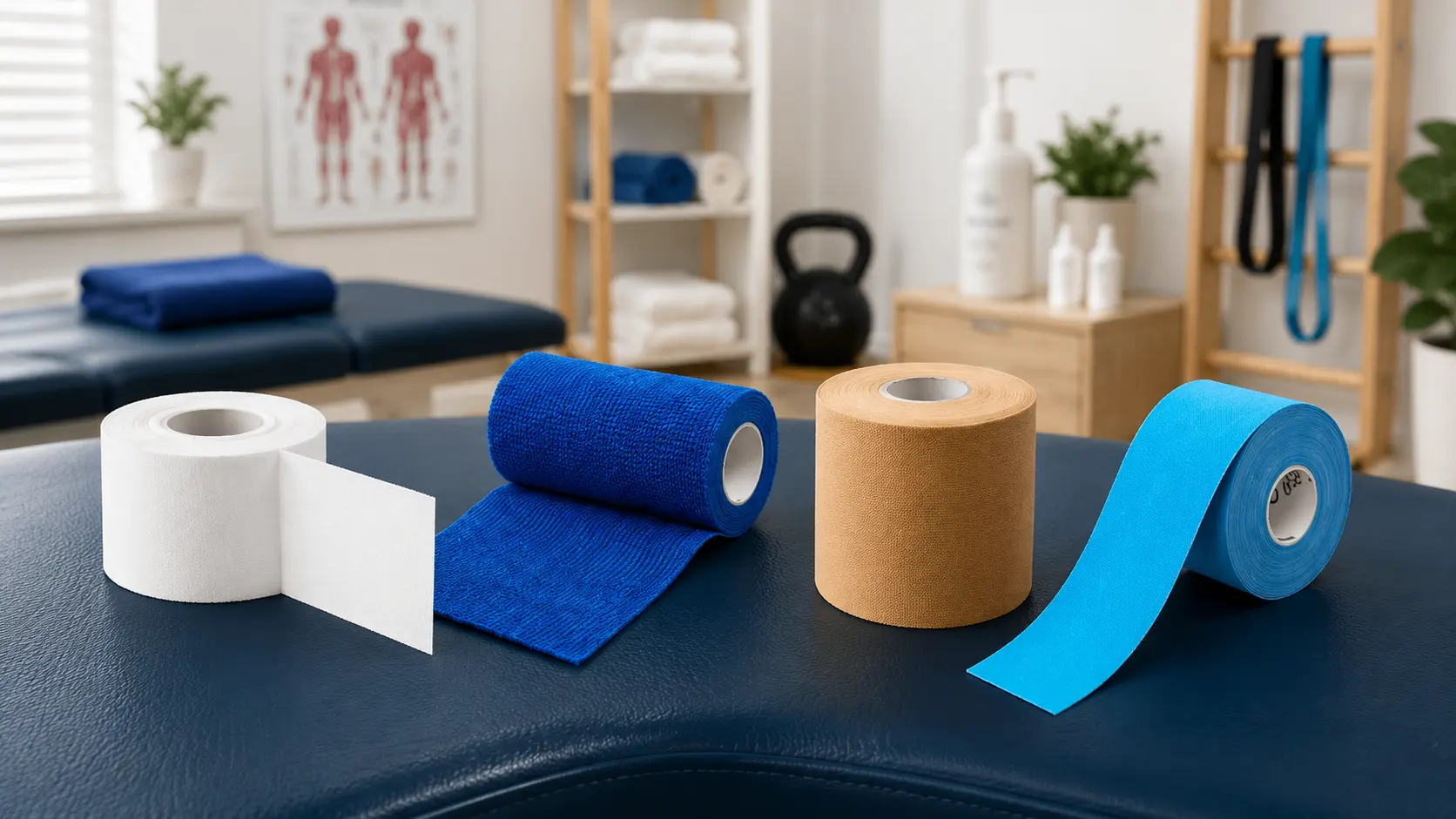
Materials for reproducing the Valencia protocol: 3.7 cm rigid tape (the trial used an inelastic Strappal bandage), scissors and skin-preparation supplies. You will find the products in our functional strapping collection, and if you need to compare base materials, see our guide to underwrap, cohesive bandage or rigid strapping.
Preparation: clean the skin (in the trial, a wet wipe and alcohol) and apply adhesive spray along the whole planned course of the tape to improve adherence (the trial used Tensospray); patient supine, ankle at 90 degrees and the leg in a neutral position (García-Gomariz et al., 2024).
Application: published protocols differ in geometry and in tension. In the Valencia trial protocol the low-Dye was applied without tensioning the tape, relying on foot position and strip geometry for its effect (García-Gomariz et al., 2024). The JOSPT guideline does not fix a specific application method and names the comparison between methods as an open research gap (Koc et al., 2023). The steps below reproduce the Valencia trial protocol, applied without tension (García-Gomariz et al., 2024).

- Place a strip over the metatarsal heads, across the dorsum of the foot.
- Place a strip on the rearfoot, forming a circuit with the first strip, across the sole.
- Apply a figure-of-eight from the fifth metatarsal, around the heel, back to the starting point.
- Repeat the same figure-of-eight path starting from the hallux.
- Apply a strip over the main pain point at the calcaneal insertion, then successive closing strips up to the strip under the metatarsal heads; 5 to 6 strips in total depending on foot length, with the aim of relaxing tension in the fascia.
Tension check: the taping should feel supportive, without pain or tingling. Do a test walk and check the colour and perfusion of the toes before the patient leaves the clinic. In the trial by Radford et al. (2006), 13 participants in the taping group reported an adverse event, mostly mild or moderate and resolved on removing the tape.
Duration and removal: tolerance varies with activity, sweating and skin type. There is no validated replacement interval; in the Valencia trial, 45% of low-Dye applications came off before day five, so schedule the review early rather than assuming a full week (García-Gomariz et al., 2024). In the trial by Radford et al. (2006) the taping stayed on for a median of 7 days, with a range of 3 to 9. Remove the tape slowly, protecting the skin and following the removal instructions for the material used.
How is kinesiology tape applied in plantar fasciitis?
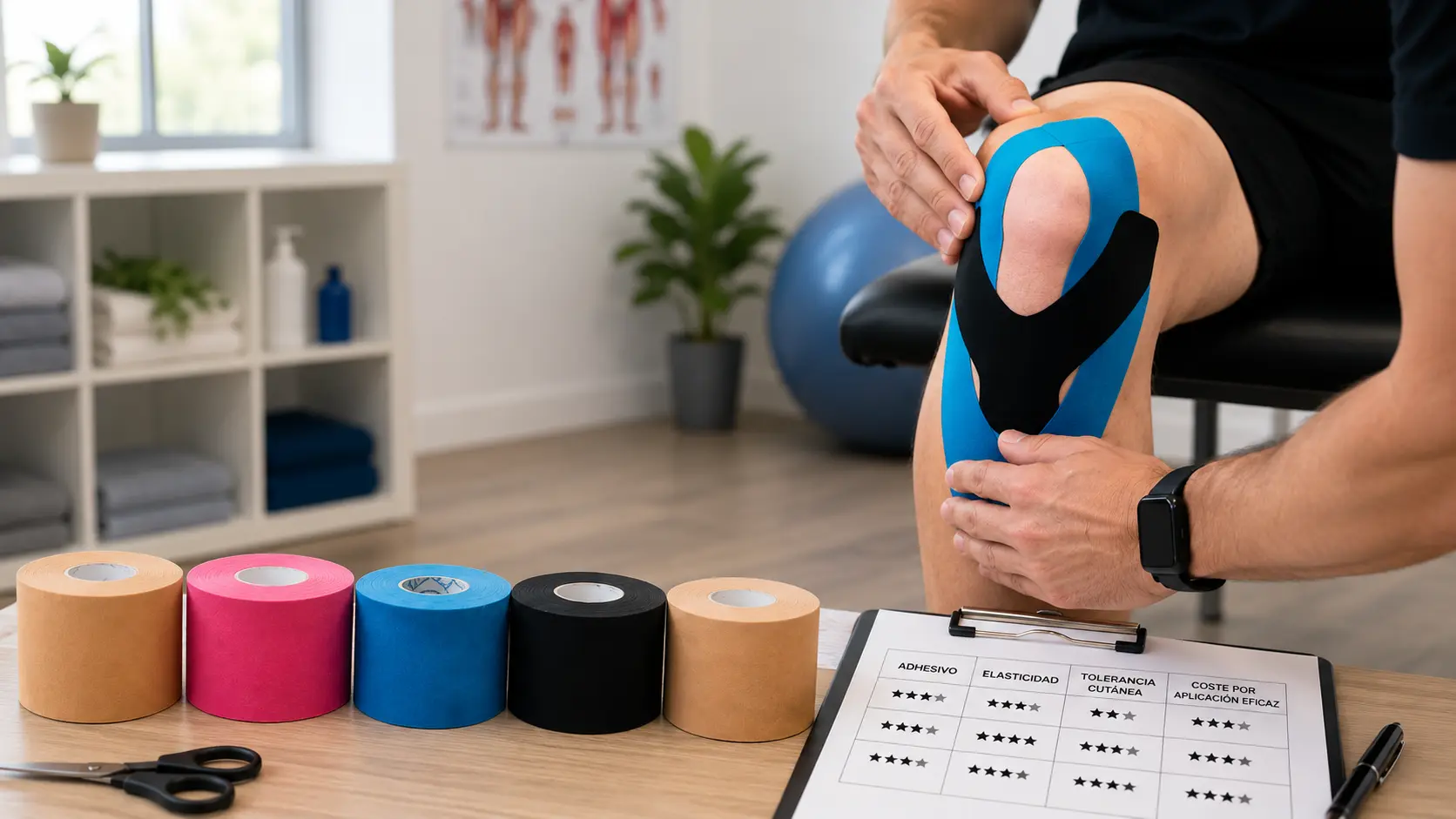
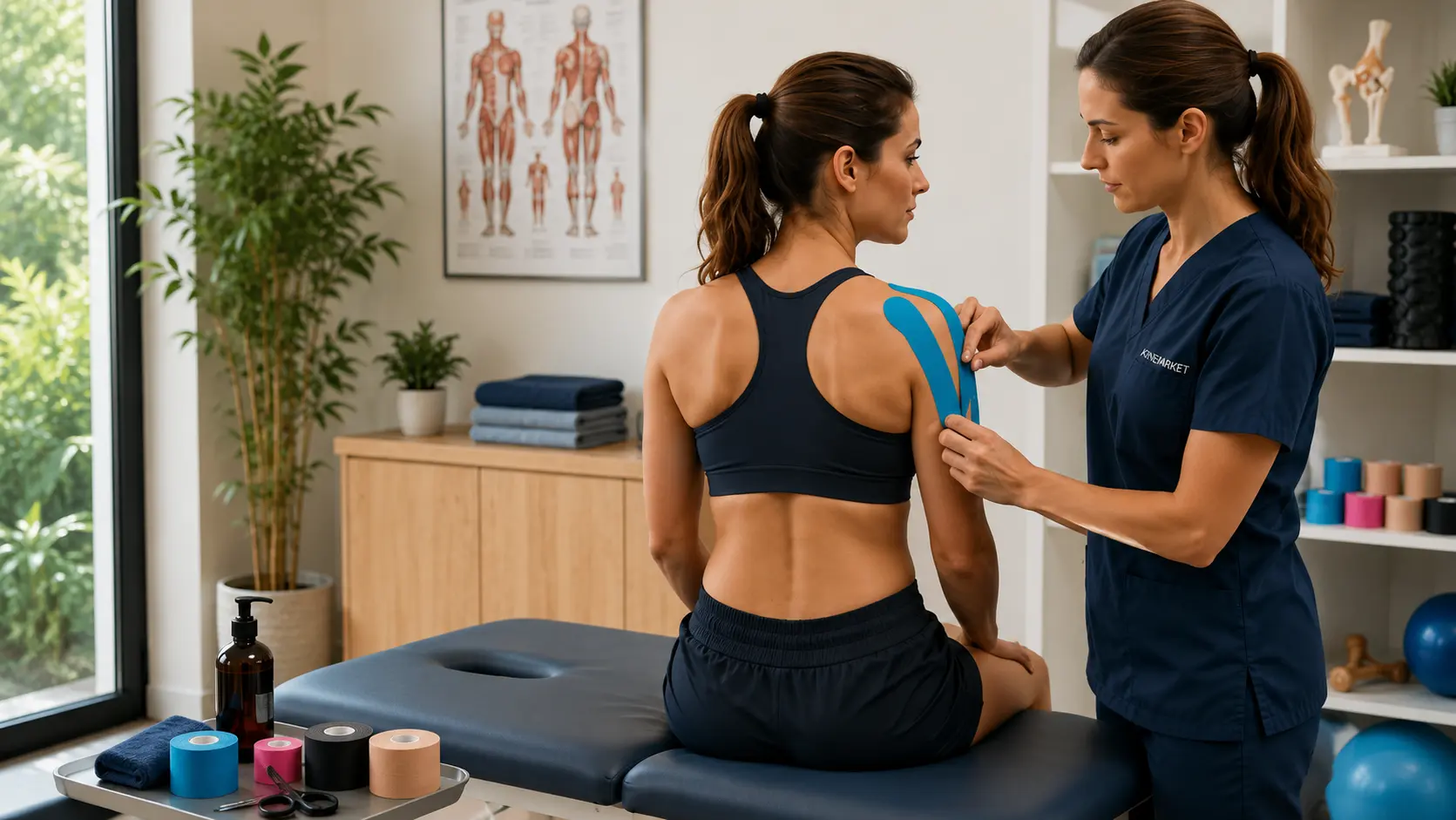
Kinesiology tape is the option when you want less restriction and more comfort than rigid tape. The seven-phase protocol in the Valencia trial combined a metatarsal strip and a rearfoot circuit at 50% tension. It then applied two figure-of-eights with tension added just as the tape crosses the pain point at the insertion, three active strips from the heel towards the metatarsals at 60%, a strip over the main pain point at 80 to 90%, and a metatarsal closing band without tension (García-Gomariz et al., 2024).
The material's characteristics, and how to compare products between brands, are covered in our guide to choosing kinesiology tape. For application, one gesture matters. Friction activates the adhesive, so rub the tape gently after placing it.
Tension depends on the protocol and on the tape used; the Valencia trial defined it phase by phase.
The warning signs that require immediate removal are intense itching, persistent redness, blistering or any skin lesion.
If you want the background on neuromuscular taping in its own right, see our guide to kinesiology taping.
Rigid tape or kinesiology tape? What the head-to-head trials show
The result depends on the outcome measured and the protocol used. Low-Dye taping changed the Foot Posture Index in the Seville trial; the elastic tapes showed early advantages for pain and, in Valencia, for comfort. None of the trials reviewed shows one technique as superior overall. Choose by objective and phase, not by habit.
The Seville trial (Castro-Méndez et al., 2022) compared Dynamic Tape, an elastic tape from a different category rather than a conventional kinesiology tape, with low-Dye taping over one week. Pain fell by 2.05 points with Dynamic Tape versus 1.10 with low-Dye, p = 0.015. Only low-Dye, however, changed the Foot Posture Index, by −0.47 with p < 0.001; Dynamic Tape did not move it. Neither technique changed ankle dorsiflexion. The authors conclude that both are appropriate provisional treatments. Relieving pain and correcting posture are not the same thing.
In the Valencia trial (García-Gomariz et al., 2024), kinesiology tape scored 9.0 for comfort against 5.3, and 9.3 for mobility against 5.8. Reported sweating was 55% with rigid tape and 0% with kinesiology tape. The analgesic advantage of kinesiology tape was 2.0 points on day 1 and had faded by day three. There were no allergic reactions in either group. After removal, pain rose slightly in both groups.
In a third double-blind RCT (n = 45), all three groups received shockwave therapy: kinesiology tape, low-Dye and control. AOFAS total scores improved in all three; low-Dye outperformed the control for pain on standing and for AOFAS function, with no superiority between kinesiology tape and low-Dye. Because every group received shockwave therapy, the study cannot isolate the effect of the taping (Unuvar et al., 2024).
The table summarises what favours each option in the trials reviewed, not a validated selection algorithm.
| Clinical goal or situation | Option favoured | Basis in the trials reviewed |
|---|---|---|
| A short-term change in foot posture (FPI) | Rigid low-Dye taping | The technique that changed the Foot Posture Index in the Seville trial |
| Comfort, mobility or less sweating as the priority | Kinesiology tape | Less sweating and better comfort and mobility in the Valencia trial |
| Sensitive skin or a previous reaction to adhesives | Underwrap, testing the tape on a small area of skin first, considering non-adhesive alternatives | Skin safety first |
How does taping fit into the treatment plan?
Taping buys a window of symptom relief; recovery rests on a multimodal plan built around therapeutic exercise and stretching. The 2023 APTA/JOSPT guideline does not set a universal minimum programme duration; the programmes studied vary in length and content (Koc et al., 2023).
Combine taping with strengthening for the intrinsic foot muscles and the gastrocnemius-soleus complex, plus specific stretching. Plantar fascia and gastrocnemius/soleus stretching also carries a grade A recommendation in the same guideline (Koc et al., 2023).
Orthoses and podiatry: the 2023 revision downgraded foot orthoses to a grade B recommendation against their use as an isolated treatment for short-term pain (Koc et al., 2023). In that context, a short trial of anti-pronation taping may provide a treatment-direction signal. A mean pain reduction of more than 1.5 points with anti-pronation taping is one of the studied predictors of a good response to custom foot orthoses at 6 months (Wu et al., 2019). With 3 or more predictors present, the rate of good outcomes rose from 66% to 89%. It is a derived rule that has not been externally validated; use it for orientation, not for exclusion.
Referral criteria: atypical or night-time pain, neurological symptoms, and a complete absence of improvement after several weeks of well-conducted treatment.
When to avoid taping or assess the risk individually: avoid taping over wounds or skin lesions in the area, and with a confirmed adhesive allergy; assess the risk individually with fragile skin, significant circulatory problems (peripheral arterial disease, deep vein thrombosis or thrombotic risk) and neuropathy with loss of protective sensation, particularly diabetic neuropathy. Always test skin tolerance first where there is a relevant history. Treat this list as screening considerations that call for individual clinical judgement and the tape manufacturer's instructions, not as a universal contraindication list.
Fasciitis Rehab: applying the windlass mechanism during exercise
Alongside taping, Fasciitis Rehab is a firm foam support the patient stands on during loading exercises, keeping the big toe in extension. It is designed for exactly that use. It is not an insole or an orthosis, because it is not worn inside the shoe. Its role is to reproduce hallux extension in a stable way during heel raises, activating the windlass mechanism consistently from session to session.
Its practical difference from a rolled towel or an improvised support is its fixed geometry, which provides the same support shape from session to session. The product's distribution documentation (Novasan, 2026) describes it for use with the hallux in extension within a progressive loading programme of at least 12 weeks. We have not identified an independent trial of the product showing better clinical outcomes than a well-placed improvised support.
It can fit into supervised clinic work and into prescribed home exercise, within a structured progressive loading programme. It sits alongside taping, manual therapy and education, never as a standalone intervention.

Common mistakes in clinic and how to avoid them
- Improvising a hybrid of protocols. Mixing strips from one technique with the tensions or geometry of another means the application no longer matches the method studied, and makes the response harder to reproduce and interpret.
- Taping only the heel. Focusing on the painful area and ignoring arch support misses the foot's overall mechanics. In low-Dye protocols such as the Valencia one, support is built over the arch and the rearfoot, not just over the painful spot.
- Not measuring pain before and after each application. Without that record you lose the signal of clinical response and, for anti-pronation taping, one of the variables used in a published, but not externally validated, prediction rule for response to custom foot orthoses (Wu et al., 2019).
- Not explaining removal to the patient. Pulling the tape off dry, in one go, causes avoidable skin damage. Give written instructions along with the review date.
Good practice alongside the above: measure and cut the tape before positioning the patient; prepare clean, dry, cream-free skin; adjust widths and cuts to keep the cost per session under control without losing quality. Recording the pattern applied, with a brief note or a photograph in the clinical record, makes it reproducible between sessions and between colleagues in the same clinic.
Frequently asked questions
How long does plantar fasciitis take to improve with taping and exercise?
There is no universal timeframe; the programmes studied in the APTA guideline vary in length and content. Taping often brings quick relief, sometimes from the first application. Sustained improvement comes with the full exercise programme, activity and load modification and, in many cases, footwear adjustments. Do not expect normal function within days. Recovery is a process.
Can I teach patients to tape themselves at home?
You can teach simplified versions after several supervised sessions, checking that technique and skin tolerance are sound. Professional application is preferable where the patient cannot reproduce the technique safely, where sensation is altered or the skin is at risk, or where precise positioning is needed, because of the risk of excessive compression and skin damage. An illustrated handout or a short video recorded in clinic helps the patient reproduce the basic version.
How often should the taping be reapplied?
There is no validated universal interval; the Valencia trial followed patients for five days, and its authors name the optimal wear time, and the effect of changing the tape after two or three days, as open questions (García-Gomariz et al., 2024). Adjust the review to the protocol used, adherence, the skin and the clinical response.
Sources and references
- Koc T.A. Jr., Bise C.G., Neville C., Carreira D., Martin R.L., McDonough C.M. «Heel Pain – Plantar Fasciitis: Revision 2023. Clinical Practice Guidelines». Journal of Orthopaedic & Sports Physical Therapy, 2023. JOSPT
- Radford J.A., Landorf K.B., Buchbinder R., Cook C. «Effectiveness of low-Dye taping for the short-term treatment of plantar heel pain: a randomised trial». BMC Musculoskeletal Disorders, 2006. PMC
- Zhang L., Chen L., Zhang X., Chen J., Luo Y. «Effectiveness of low-dye taping in the treatment of patients with plantar fasciitis: A systematic review and meta-analysis». Medicine, 2026. PMC
- Guimarães J.S., Arcanjo F.L., Leporace G., et al. «Effects of therapeutic interventions on pain due to plantar fasciitis: A systematic review and meta-analysis». Clinical Rehabilitation, 2023. Sage
- Castro-Méndez A., Palomo-Toucedo I.C., Pabón-Carrasco M., Ortiz-Romero M., Fernández-Seguín L.M. «The Short-Term Effect of Dynamic Tape versus the Low-Dye Taping Technique in Plantar Fasciitis: A Randomized Clinical Trial». International Journal of Environmental Research and Public Health, 2022. PMC
- García-Gomariz C., Hernández-Guillén D., Nieto-Gil P., Blasco-García C., Alcahuz-Griñán M., Blasco J.M. «Effects of Kinesiotape versus Low-Dye Tape on Pain and Comfort Measures in Patients with Plantar Fasciitis: A Randomized Clinical Trial». Life, 2024. PMC
- Madruga Armada Ó., Molines Barroso R.J., Orejana García Á.M. «Efectos del vendaje Low-Dye sobre el pie. Revisión narrativa». Revista Española de Podología, 2019. Full text
- Díaz López A.M., Guzmán Carrasco P. «Efectividad de distintas terapias físicas en el tratamiento conservador de la fascitis plantar. Revisión sistemática». Revista Española de Salud Pública, 2014. SciELO
- Wu F.L., Shih Y.F., Lee S.H., Luo H.J., Wang W.T.J. «Can short-term effectiveness of anti-pronation taping predict the long-term outcomes of customized foot orthoses?». BMC Musculoskeletal Disorders, 2019. PMC
- Distribution sheet for the Fasciitis Rehab support (Novasan), accessed August 2026: design, intended use with the hallux in extension, and progressive loading programme. Commercial distribution documentation; cited without a link.
- Unuvar B.S., Anaforoglu Kulunkoglu B., Gercek H., Tufekci O., Bagcaci S., Erbas O. «Comparison of the Effects of Low-Dye and Kinesiology Taping in Plantar Fasciitis on Pain and Function: A Randomized Double-Blind Study». Journal of the American Podiatric Medical Association, 2024. DOI
- Yoho R., Rivera J.J., Renschler R., Vardaxis V.G., Dikis J. «A biomechanical analysis of the effects of low-Dye taping on arch deformation during gait». The Foot, 2012. PubMed